
Introductions
Becoming a project manager is one of the most exciting career moves you can make. It gives you the opportunity to lead teams, solve problems, manage change, influence decisions, and turn ideas into real business outcomes.
But here is the uncomfortable truth – Many aspiring project managers slow down their own journey before they even begin. Not because they lack intelligence. Not because they lack ambition. Not because they cannot learn.
They slow themselves down because they misunderstand what the project manager journey really requires.
Project management is not just about getting a certificate. It is not just about knowing terminology. It is not just about reading frameworks, templates, and textbooks.
It is a practical leadership discipline. And if you want to grow from beginner to confident project manager, there are five mistakes you must avoid.
If you want to get more details, there is a full video here that delves deeper into this explaining the project manager mistakes. You can also start by improving your project management skills and leadership by downloading a free PM Skills checklist from here.
Table of Contents
1. Skipping the Research Phase

One of the biggest mistakes people make is jumping into project management without first understanding what the role actually involves. They hear that project management is a good career. They see people with PMP, PRINCE2, Scrum, Agile, or other certifications. They notice that project managers are needed in many industries.
So they rush into courses, pay for certifications, download templates, and start calling themselves project managers. But they have not yet asked the most important questions:
- What does a project manager actually do every day?
- What problems does a project manager solve?
- What kind of pressure comes with the role?
- What industries need project managers?
- What skills are required beyond certification?
- Is this career aligned with my strengths, personality, and long-term goals?
Skipping this research phase is dangerous because project management is often misunderstood from the outside and is a common mistake.
Many people think it is just about meetings, schedules, and reports.
But in reality, project management involves decision-making, stakeholder management, conflict resolution, planning, negotiation, communication, risk management, issue escalation, governance, leadership, and accountability.
Before you invest heavily in the journey, take time to understand the journey.
Research the role. Speak to real project managers. Watch interviews. Read job descriptions. Study the expectations across different industries. Understand the difference between project coordination, project administration, project management, programme/program management, and portfolio management.
Do not enter the profession blindly. Clarity before commitment is wisdom.
2. Studying Theory Without Practice

Theory is important. I will never discourage anyone from studying.
You need to understand project life cycles, project planning, risk management, stakeholder engagement, change control, scope management, governance, reporting, and delivery approaches.
But here is the problem – Many people become “exam-smart” but remain “real-world fragile.” and make mistakes.
They know the definitions, but they cannot run a meeting. They understand the risk register, but they cannot facilitate a risk discussion. They know what a stakeholder is, but they struggle to manage difficult stakeholders. They can explain change control, but they panic when the client changes direction mid-project. They can describe project governance, but they do not know how to escalate an issue properly.
Project management cannot be mastered by theory alone. You must practice.
- Start small.
- Volunteer to coordinate a team activity.
- Help organize a community project.
- Offer to assist an experienced project manager.
- Take responsibility for a small internal initiative.
- Become a project administrator or project coordinator.
- Support reporting, scheduling, meeting minutes, RAID logs, action tracking, or stakeholder communication.
Every small project teaches you something valuable.
- You learn how people behave when deadlines are tight.
- You learn how unclear scope creates confusion.
- You learn how assumptions become risks.
- You learn how poor communication creates rework.
- You learn how plans change once reality starts speaking.
That is where real project management growth happens.
Theory gives you language. Practice gives you judgment.
And in project management, judgment is everything.
3. Chasing Every Certification
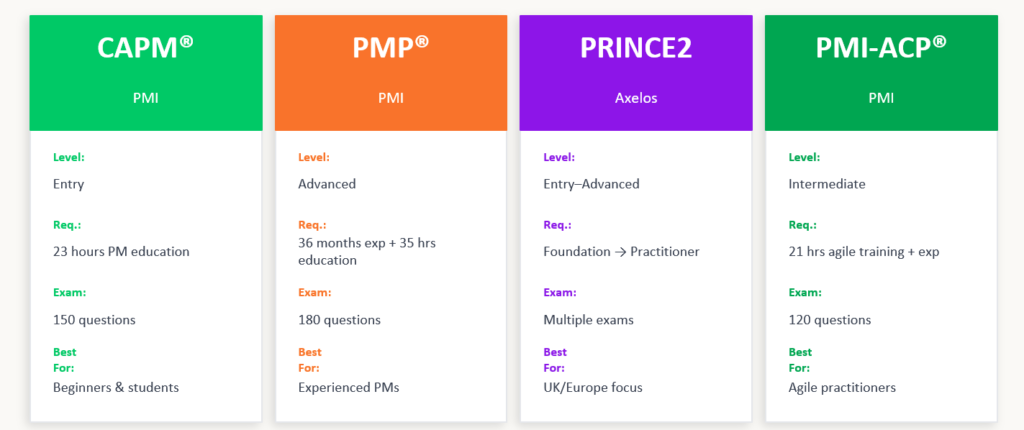
Certifications are useful. They create structure. They build confidence. They show commitment. They can open doors.
But chasing every certification is not the same as building competence and a big mistake. Some aspiring project managers believe that the more letters they collect after their name, the more prepared they become.
So they move from one certification to another-
- PMP
- PRINCE2
- Agile
- Scrum
- SAFe
- Lean
- Six Sigma
- Kanban
The list continues.
But here is the question – Can you apply what you have learned?
A certification without application is only potential.
It is better to have one strong certification supported by real experience than five certifications with no practical delivery exposure.
Depth beats breadth.
Choose certifications strategically. Pick the ones that support your career direction, industry, and delivery environment.
For example, if you are moving into structured project environments, PRINCE2 or PMP may be highly useful. If you are working in product, software, or adaptive environments, Agile and Scrum knowledge may help. If your work involves business transformation, change management may become relevant.
But do not collect certifications out of fear. Certifications should support your growth, not replace your growth. The real goal is not to look qualified.
The real goal is to become capable.
4. Waiting Until You Feel 100% Ready

This is one of the quietest mistake, but most damaging mistakes in the project manager journey.
Many people keep waiting.
- They wait until they finish one more course.
- They wait until they get one more certification.
- They wait until they understand every process.
- They wait until they feel confident.
- They wait until someone officially gives them permission.
But project management confidence does not come before action. It comes through action. You will never feel 100% ready before your first real project. And honestly, even experienced project managers do not feel 100% ready for every project.
Every project has uncertainty.
- New stakeholders.
- New risks.
- New constraints.
- New politics.
- New priorities.
- New problems.
That is the nature of the profession. The goal is not to eliminate uncertainty. The goal is to learn how to lead through uncertainty.
So do not wait until you are perfect. Create a readiness plan and start moving.
Identify the skills you need. Find small opportunities to practice. Ask to support project activities. Study while applying. Get feedback. Reflect. Improve. Repeat.
Clarity often comes after you start, not before.
Courage is part of the project manager journey.
At some point, you must stop preparing to begin and actually begin.
5. Ignoring Soft Skills

This is the mistake that destroys many project managers quietly.
Some people believe project management is mainly about tools, templates, dashboards, plans, and methodologies. Those things matter and many make mistakes.
But project management is deeply human. Projects are delivered by people, for people, through people. That means soft skills are not optional. They are core project management skills and are what keep projects moving when complexity increases.
- Communication,
- empathy,
- listening,
- negotiation,
- influence,
- emotional
- intelligence,
- conflict management,
- facilitation,
- stakeholder engagement
A project manager who cannot communicate will struggle, no matter how many tools they know.
Think about it since many make mistakes on this.
You need communication to explain the project plan. You need communication to align the team. You need communication to manage expectations. You need communication to report progress. You need communication to escalate risks and issues. You need communication to handle change requests. You need communication to challenge unrealistic deadlines. You need communication to keep sponsors informed. You need communication to rebuild trust when things go wrong.
Many project problems are not technical problems. They are people problems.
Misalignment. Unclear expectations. Hidden assumptions. Unspoken concerns. Poor stakeholder engagement. Weak escalation. Lack of ownership. Conflicting priorities.
A project manager who masters communication becomes far more effective than one who only masters templates.
Tools help you organize the work.
Soft skills help you move people toward the work.
And without people, there is no project delivery.
My Conclusion and Final Thoughts
The project manager journey is not built on shortcuts. It is built on awareness, preparation, practice, courage, and continuous improvement.
Many aspiring project managers slow themselves down not because they are incapable, but because they focus on the wrong things too early. They chase certificates before understanding the role. They study theory without testing it in real situations. They wait for perfect confidence before taking action. They underestimate the importance of communication, influence, and stakeholder management.
However, project management is not mastered in the classroom alone. It is mastered in the real world — in meetings, conversations, decisions, escalations, planning sessions, risk discussions, stakeholder conflicts, and delivery challenges.
If you are on this journey, do not rush the process, but also do not delay your growth unnecessarily. Research the profession. Build a strong foundation. Practice wherever you can. Choose certifications wisely. Start before you feel fully ready. And most importantly, develop the soft skills that allow you to lead people, not just manage tasks.
The best project managers are not the ones who know every theory by heart. They are the ones who can apply knowledge with judgment, communicate with clarity, lead with confidence, and keep moving when projects become uncertain.
So, as you build your project management career, remember this:
Your growth will not come from collecting titles alone. It will come from becoming useful, reliable, trusted, and effective in real project environments.
That is where the real transformation happens.
Frequently Asked Questions (FAQ)
1. What is the most important skill for a new project manager?
Communication is often cited as the top skill, as you must bridge the gap between stakeholders and the technical team.
2. Why is the research phase so critical?
It ensures you understand the daily pressures and administrative requirements before investing in expensive certifications.
3. Do I need a PMP certification to start?
While helpful, many start with entry-level roles or certifications like CAPM to build foundational knowledge first.
4. How do I avoid career-stalling pitfalls?
Continuous learning, seeking mentorship, and staying organized are key strategies to avoid common mistakes.
5. What does Project Astute suggest for beginners?
Focusing on foundational research and understanding the core methodologies like Agile or Waterfall.
6. Is project management right for everyone?
No, it requires a specific blend of leadership, organization, and high stress tolerance identified during your research.
7. How can I accelerate my success in this role?
By avoiding the five critical mistakes mentioned and consistently delivering value to your stakeholders.
